Custom tour booking system for an Australian recycling facility

Tour Booking Module

Project goals

The client needed to replace a phone-, email-, and spreadsheet-based reservation process with online self-service booking for public, school, and industry tours. The module had to show current availability, support recurring schedules and one-off exceptions, account for holidays and operational closures, prevent conflicts between linked tours, and let staff manage routine changes in Kentico.

Result

In the first six months, the module processed more than 500 bookings. No double-bookings were reported during the first 60 days. Booking analytics showed an average completion time of 1 minute 48 seconds, while the operations team estimated that administration time fell by 70%.

Key results

  • 500+ bookings processed in the first six months
  • No double-bookings reported during the first 60 days
  • 70% less administration time, based on the client’s estimate
  • 1:48 average booking time, based on booking analytics
  • Automatic confirmations for every successful booking

About the client

The client operates a regional recycling and resource recovery facility in Australia. Its education program serves around 3,000 visitors per year through four tour types for schools, community groups, industry partners, and public agencies.

Tour availability depended on staffing, shared spaces, group capacity, operating hours, closures, and relationships between sessions. Booking one tour could make another unavailable during the same period.

The organization wanted to extend its Kentico website rather than add a separate booking product.

Client quote

“The new system removed most of the back-and-forth from tour bookings. Our team can now manage closures and schedule changes directly, and visitors receive confirmation immediately.” — Operations Manager, Australian recycling facility

Business challenge

Before the project, every reservation required staff involvement. A typical request generated two to four emails, and busy periods required up to 12 hours of administrative work each week.

A standard calendar could display recurring sessions, but not reliably handle shared resources, linked tours, closures, capacity rules, and one-off exceptions. Staff still had to determine whether a requested session was genuinely available.

Why Bits Orchestra

The client selected Bits Orchestra for its experience extending Kentico platforms with custom .NET workflows. Bits Orchestra is a Kentico Bronze Partner with 10 Kentico-certified developers and five Kentico project awards.

Rather than recommending a replatform or separate booking product, the team designed the module around the client’s existing website and operational rules.

Solution

Bits Orchestra built a custom booking module with three connected components:

  • a public booking flow;

  • a Kentico administration interface;

  • a rules-based .NET scheduling service.

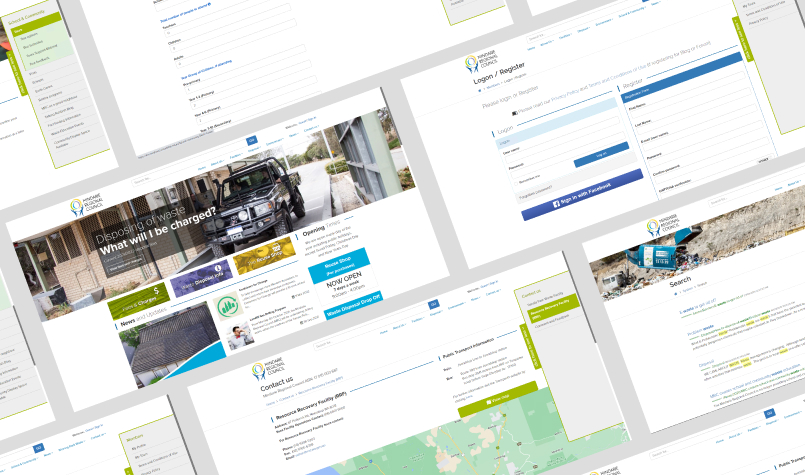
Administrators could manage recurring tours, capacity limits, holidays, closures, and dependencies between sessions. The system generated bookable tour occurrences from these rules and stored reservations and exceptions separately.

Visitors could view available sessions, enter attendee details, and submit a reservation online. Availability was checked again at submission. Database constraints prevented duplicate bookings for the same occurrence, while dependency checks blocked conflicts between linked tours.

Delivery approach

The project began with two discovery workshops covering recurrence patterns, exceptions, shared resources, visitor data, and common booking errors.

A clickable prototype was tested with six staff members and eight pilot users. Development was completed across four two-week sprints.

QA covered more than 60 scenarios, including:

  • simultaneous booking attempts;

  • linked-tour conflicts;

  • holiday and weather closures;

  • capacity limits;

  • failed email delivery;

  • schedule changes affecting existing reservations.

Technical implementation

The module was developed as a custom Kentico 12 extension with:

  • a .NET service layer for scheduling and booking validation;

  • server-side validation, CSRF protection, and CAPTCHA;

  • role-based access to bookings and scheduling controls;

  • audit logging for schedule changes;

  • Azure App Service and SQL Server hosting;

  • Azure DevOps pipelines across development, staging, and production;

  • Application Insights monitoring for booking and notification failures.

The release included rollback planning and two weeks of post-launch support.

Before and after

Area

Before

After

Booking intake

Phone and email

Online self-service

Availability

Confirmed manually

Displayed online

Schedule management

Spreadsheets

Managed in Kentico

Closures

Checked per request

Applied through rules

Linked toursCross-checked manually

Conflicts blocked automatically
ConfirmationsSent manually

Sent automatically

Records

Distributed spreadsheets

Centralized booking data

Team

A project manager, backend developer, frontend developer, QA/DevOps engineer, and client operations lead delivered the project.

Summary

The facility moved tour reservations online through its existing website. Visitors could view available sessions, submit group details, and receive confirmation without waiting for staff, while operations staff managed schedules, capacity limits, closures, and exceptions directly in Kentico.

The project shows how custom booking logic can extend an existing platform when off-the-shelf tools cannot support shared resources, linked sessions, capacity rules, and operational exceptions. The same approach can support attractions, guided experiences, facility visits, educational programs, and travel portals with complex availability requirements.

Does your travel portal need booking logic that off-the-shelf tools cannot support?

Bits Orchestra develops custom travel portals and booking systems for complex schedules, linked experiences, capacity rules, and operational exceptions.

About the project

Client:

Australian regional recycling and resource recovery facility

Company type:

SMB

Country:

Australia

Timeline:

8 weeks

Solution:

Check other case studies