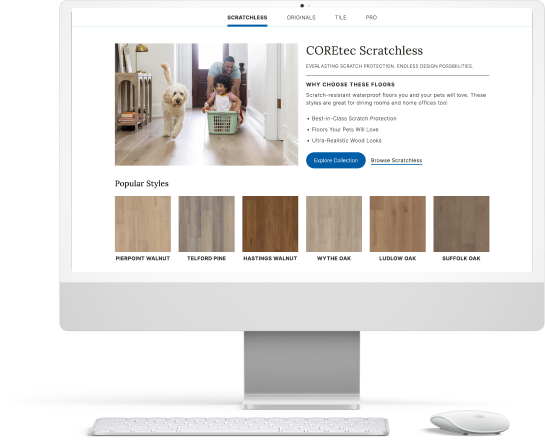
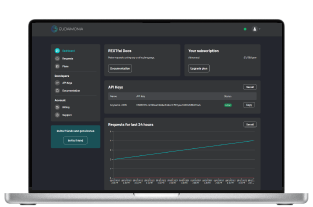
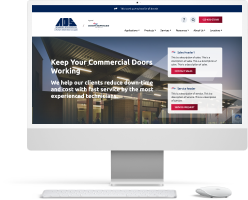
The application has been built for enterprise manufacturing clients and aimed to get rid of paper print materials and ensure everyone uses up to date version of the product documentation, such as product installation instructions, warranties, etc. and usage of outdated documents could cause damage and/or lawsuits.
The application allowed business to save on printing product documentation as well as establish the single source of truth and avoid lawsuits caused by usage of outdated documentation.
95%+ reduce printing cost through digitization
10,000+ documents actively managed with automated retention across multiple brands
90%+ fewer document-related errors, reducing customer complaints and rework
This global manufacturing company, headquartered in North America, operates across several business units and brand lines. As a leading supplier in the building materials and commercial interiors segment, the company serves distributors, contractors, and end customers in more than 50 countries.
Each division maintained its own product documentation standards, specifications, warranties, and installation guides. Over time, managing this content across multiple brands and compliance zones became increasingly difficult.
Printed manuals, outdated specs, and scattered approval processes led to:
Frequent use of outdated documents in production and field installation, leading to costly rework and inconsistent outputs
Customer complaints and compliance exposure, particularly in highly regulated regions with changing documentation requirements
Lost time chasing down approvals, emailing PDFs, and verifying the latest version—often resulting in delays across departments
Excessive printing costs, with teams still relying on binders, hardcopies, and local file storage that quickly became outdated
They needed more than a tool—they needed a manufacturing document management software as a controlled system that enforced governance, ensured compliance, and scaled with their operations.
Bits Orchestra developed a fully custom enterprise document management system (EDMS) designed to meet the needs of an enterprise-level, multi-brand manufacturer. The system supports thousands of users and over 10,000 documents, with minimal performance load—even at peak times. It includes granular access controls, so managers can assign permissions based on department, brand, location, or document type, and ensures sensitive content is only visible to those who need it.
We also added built-in analytics and audit trails. Teams can see who viewed, edited, or approved what, and managers get clear reports on bottlenecks, usage, and compliance. All critical files are automatically backed up and versioned. The system is aligned with enterprise recovery policies and includes rollback options to minimize risk during changes.
This wasn’t dropped in overnight. We supported the rollout in phases—starting with high-priority divisions—while providing hands-on training, documentation, and internal change support. This is a typical example of how our custom software development services align with complex enterprise rollouts.
Custom document management system architecture for multi-brand manufacturing client
Dynamic Document Generator
Depending on the requestor’s brand, each document is assembled in real time with the correct logo, fonts, disclaimers, and contact info.
Workflow and approval automation
We customized Kentico’s workflow engine to handle multiple approvers, delegation, and parallel approvals—critical for a large internal review process.
Retention Rules Engine
Documents are automatically retired based on document type and retention policies defined by the client’s legal and compliance teams.
Secure Viewer
To ensure sensitive documents aren’t leaked or printed, we built an embedded viewer that prevents downloads or copies.
User “Books”
Employees can group frequently used documents into their own collections for faster access without duplication.
Integrations were powered by secure REST APIs and ensured seamless data flow between the DMS and the client’s Specification Service, internal product catalogs, and ERP system.
Served as a central source for other internal systems to pull documentation—though it stayed mostly independent from third-party tools.
Our team worked closely with client for over two years to build a fully tailored document management software for manufacturing, holding weekly meetings with multiple stakeholders. Requirements started out vague, so we used an agile process to define and refine features as we went.
The team included: two experienced .NET developers and Kentico developers, a frontend developer (Angular), a QA engineer, a business analyst, and a project manager.
Every two weeks, we sprinted toward clear milestones, demonstrating tangible progress each Friday. Each morning kicked off with a quick team sync via Microsoft Teams—15 minutes tops—clearing blockers and aligning goals for the day. Our client never had to guess where things stood; we used Azure DevOps for transparent tracking, Figma for visual collaboration, and Slack for quick day-to-day communication.
Weekly calls with stakeholders reviewed progress, budget, and any shifting priorities. Every month, we stepped back for a strategic roadmap session, adjusting based on real-world feedback. To ensure the system stayed fast and secure, our development pipeline automatically ran rigorous tests, security checks, and performance benchmarks.
The tight, transparent workflow meant no surprise costs, no black-box development, and a product that fit real-world use from day one. By sprint six, early adopters were already using the platform in production, and feedback loops shortened future sprints even further.
This wasn’t a plug-and-play implementation. Our team built out advanced logic and custom rules for:
Handling parallel and delegated approvals
Dynamically assembling documentation with correct styling and branding
Creating permanent links that always lead to the latest approved version
Automating retention and retirement workflows in line with compliance standards
All features were developed with real-world use in mind, ensuring minimal disruption to how teams already worked—just smarter and faster.
The system quickly became a cornerstone of the client’s operations across all brands. After rollout, the impact was immediate:
No more documentation-related errors — teams stopped relying on outdated materials, reducing costly mistakes in the field.
Legal audit-ready from day one, with automated retention rules and full traceability.
Printing costs eliminated — documentation went fully digital, cutting waste and expense.
Manual steps removed — updates and distribution now happen in a few clicks, not through email chains.
Training time dropped — a consistent, branded interface made onboarding faster and easier across departments.
The numbers speak for themselves:
Tasks that used to take days — like formatting and approvals — now take minutes.
The company saved tens of thousands annually by eliminating printing, rework, and claim disputes.
Adoption was fast. Within 60 days, hundreds of internal users were onboard and using the system daily.
Today, the platform operates as a centralized document control software for manufacturing, with strict compliance baked in. It’s been rolled out company-wide and is now viewed as a critical part of the organization’s infrastructure — not just a tool, but a foundation.
“This system didn’t just replace documents. It helped us scale with confidence. We stopped worrying about the risks tied to outdated content, and our teams now trust what they’re using every day.” — Director of Operations, Global Manufacturer (under NDA)
This isn’t a one-time deployment. As the client's operations evolve, we continue to improve the platform—adding analytics, exploring automation, and integrating with other systems.
It’s more than a manufacturing DMS—it’s now part of their digital core.
Company type:
Country:
Industry:
Services: